
The BPC-157 dosage in my book runs from 250 to 500 mcg a day, oral or injected, depending on what you’re healing. BPC-157 shows up in more protocols than almost anything else I use: gut repair, old injuries, joints, recovery, sexual health, longevity and hair. I used it to recover from injuries that conventional medicine wanted to fix with surgery. The doses are spread across seven chapters, so this page puts all of them in one table. It also covers what the research really shows, which is less than the hype and more than the critics admit.
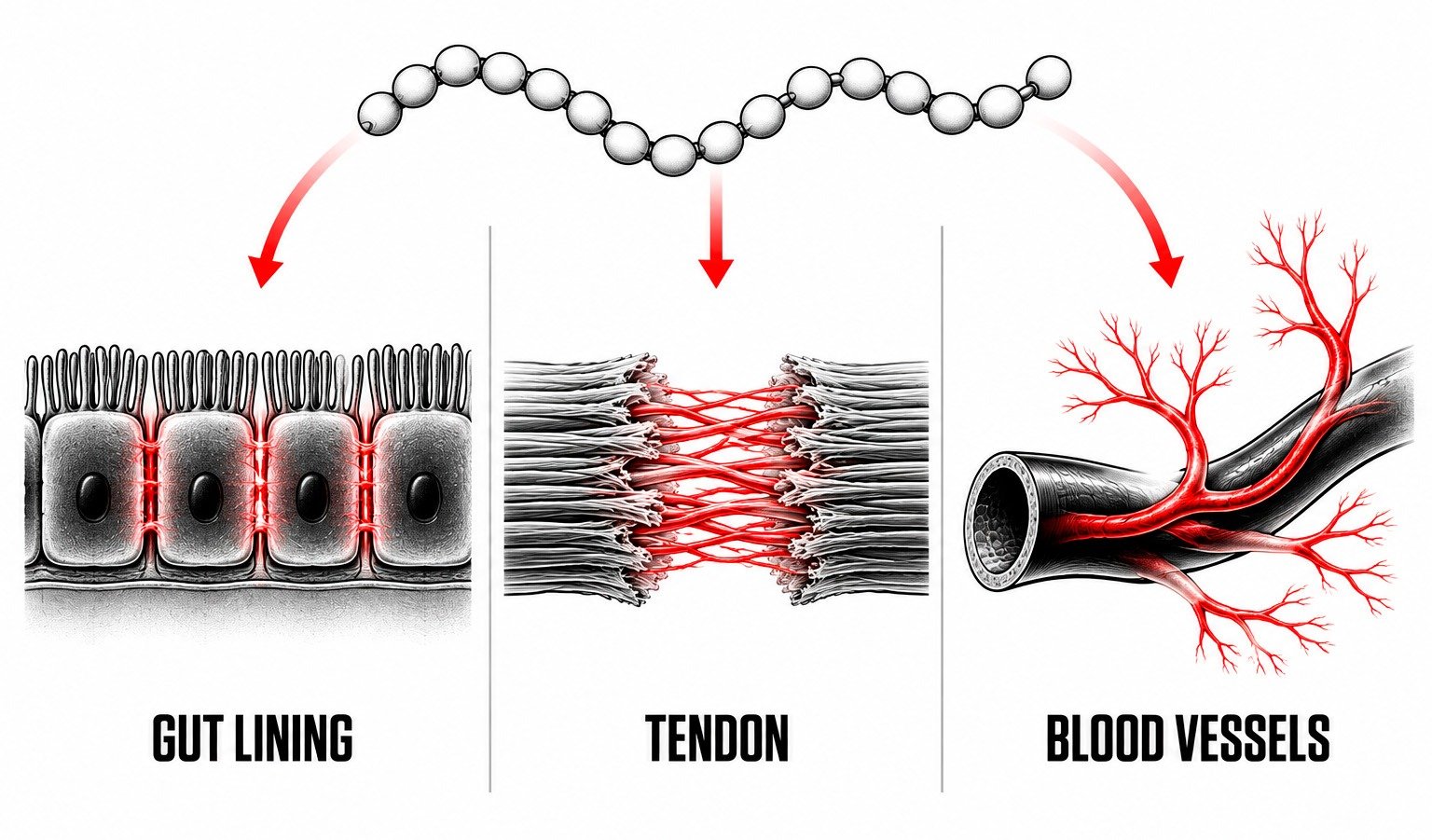
BPC stands for Body Protection Compound, so the name says what it does. Chemically, it is a chain of 15 amino acids, based on a protein in human gastric juice. A research group in Croatia has studied it for over 30 years, mainly in rats [1][2].
In those studies, it consistently heals damage in the stomach and gut, including damage from NSAIDs like ibuprofen. It also speeds healing in tendons, ligaments, muscle and blood vessels. Overall, the common thread is blood flow: it promotes angiogenesis, the growth of new blood vessels into damaged tissue.
In the gut chapter, I call BPC-157 the single most effective compound for gut healing I’ve encountered. That is why I gave it the name.
Still, the reason it shows up everywhere in the book is simple. Most of what breaks in an enhanced body is tissue: a leaky gut from NSAIDs and oral steroids, a tendon that can’t keep up with the weight, or a joint that aches every morning. BPC-157 targets repair itself, so it fits almost every protocol.
However, when I first talked about it publicly, critics warned it caused cancer. The honest picture is more interesting than either side. The human data is still thin, although the animal research is large and consistent.
In animals: a lot. The book’s two sources are reviews by the Croatian group that discovered it, covering dozens of rat studies on the stomach, gut, and the gut-brain connection [1][2]. In cell studies, it helped tendon cells grow, survive and migrate, which is how a tendon repairs itself [3].
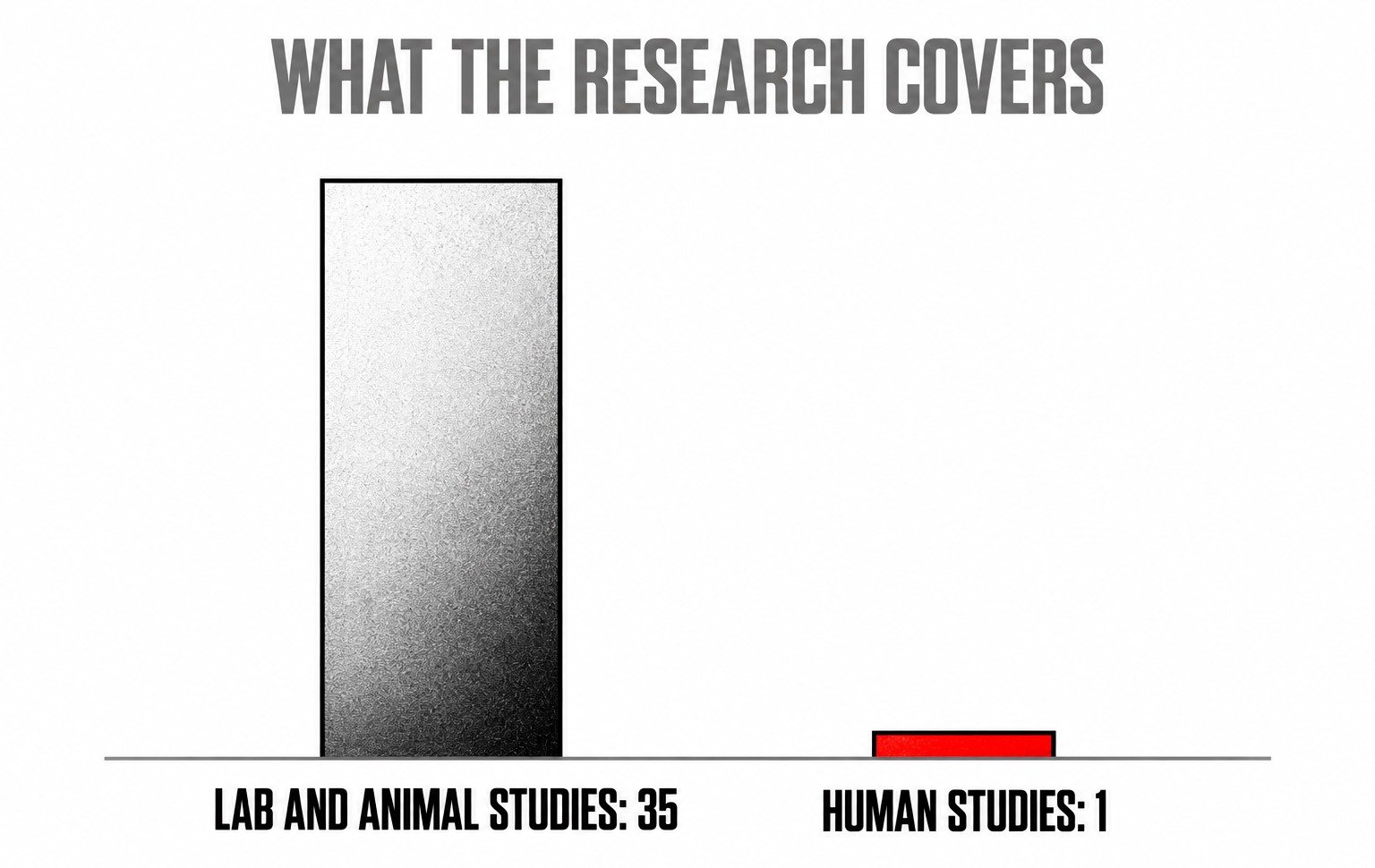
In humans: almost nothing yet. A 2025 systematic review searched every study on BPC-157 in sports medicine. It found 36 studies. Of those, 35 were in animals or cells. The only human study was a look back at 12 patients who got BPC-157 injected into a painful knee. Seven of the 12 said the pain improved for more than six months [4].
Therefore, the review’s conclusion was cautious: it shows promise, but human safety and dosing are unknown [4]. That also matches my view. The results I’ve seen are real to me, but they are experience, not trials.
Below is the full BPC-157 dosage table by goal, oral vs injected, timing, cycling, safety, labs and the comparison with TB-500 and GHK-Cu.
The full BPC-157 dosage table (nine protocols), oral vs injected, timing, cycling, safety, labs and the comparison with TB-500 and GHK-Cu are for members. Create your free account to keep reading.
When you create your free membership, you’ll unlock the full article and be able to continue reading.
Already a member?
This page documents Dr. Tony Huge’s research and self-experimentation. It is journalism and education, not medical advice, and it creates no doctor-patient relationship. Dr. Tony Huge holds a Juris Doctor; he is a lawyer, not a physician. Read the full Legal Disclaimer.