
The tesofensine dosage in my own fat loss protocol is 250 micrograms in the morning. In the Natural Plus fat loss focus, the book says 0.5 to 1 mg. In the glossary, I call it the compound that deletes hunger. This page explains the gap between those doses, what the main trial found, and what a half-life of about nine days means for how you use it. It also covers the two warnings the book puts in bold: serotonin syndrome and redlining your heart rate at night.
Tesofensine is a triple reuptake inhibitor. It keeps three brain chemicals active for longer: norepinephrine, serotonin and dopamine.
Originally, it was developed for Parkinson’s and Alzheimer’s disease. It didn’t work well for either, though. However, the patients kept losing weight, so the developers switched to obesity [1].
In the book, then, it sits in the hunger pathway of the Fat Loss Matrix, next to semaglutide, tirzepatide and 5-HTP. The job is simple: you eat less without suffering, because the hunger isn’t there.
The book puts this in bold, and so do I. Never combine tesofensine with SSRIs, MAOIs or other serotonergic drugs. Tesofensine raises serotonin. So stacking it on another drug that raises serotonin can cause serotonin syndrome: fever, agitation, shaking, a racing heart, and in severe cases, death. So if you take an antidepressant, avoid this compound entirely.
Because tesofensine stays in your body for weeks (see the half-life section), this risk doesn’t end the day you stop taking it.
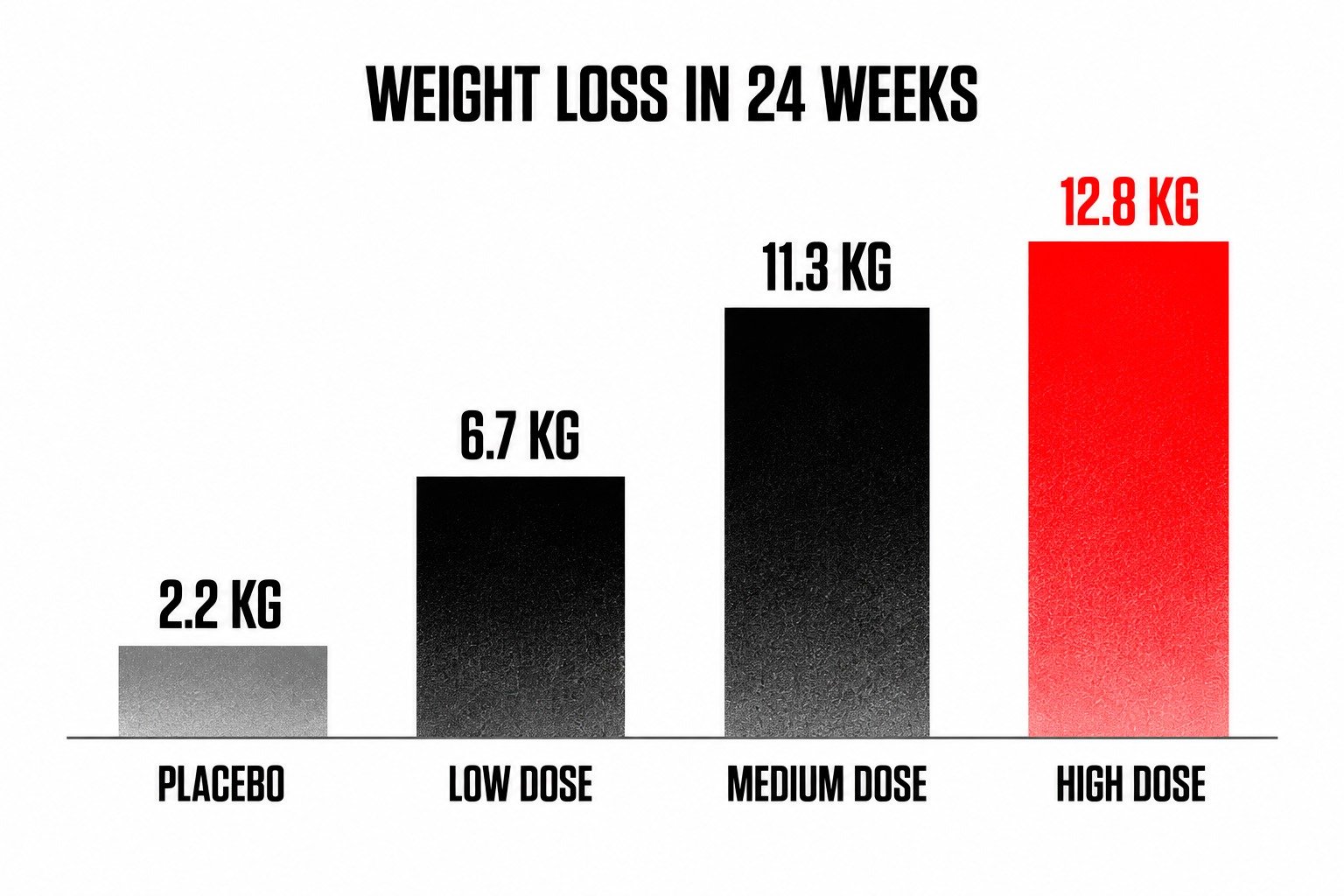
The key trial, which the book cites, was published in The Lancet in 2008. It gave 203 obese patients tesofensine or placebo for 24 weeks, along with a diet [2]. The average weight loss was:
| Group | Weight loss in 24 weeks |
|---|---|
| Placebo + diet | 2.2 kg |
| 0.25 mg | 6.7 kg |
| 0.5 mg | 11.3 kg |
| 1.0 mg | 12.8 kg |
At 0.5 and 1 mg, that was about twice the loss seen with sibutramine or rimonabant, the obesity drugs of that time. Still, 1 mg added only 1.5 kg over 0.5 mg, with more side effects and higher blood pressure. So the authors recommended 0.5 mg [3].
After that, the developer ran a phase 3 program at 0.25 and 0.5 mg [4]. As of the latest public update I found, it isn’t approved anywhere.
Below is the full tesofensine dosage table, which dose to choose, the half-life, the heart rate rules, side effects, interactions and the comparison table.
The full tesofensine dosage table, what the half-life means for timing and stopping, the heart rate rules, side effects, interactions and the comparison with GLP-1s are for members. Create your free account to keep reading.
When you create your free membership, you’ll unlock the full article and be able to continue reading.
Already a member?
This page documents Dr. Tony Huge’s research and self-experimentation. It is journalism and education, not medical advice, and it creates no doctor-patient relationship. Dr. Tony Huge holds a Juris Doctor; he is a lawyer, not a physician. Read the full Legal Disclaimer.