
Magnesium for sleep is one of the basics in my book: it’s cheap, it’s safe, and about half of people don’t get enough. In the book, it shows up in seven places: sleep, gut, recovery, brain, fertility, longevity and the Sleep Bible. The book’s basic dose is 300 to 400 mg before bed. That sounds simple until you read the label, because 400 mg of magnesium glycinate contains only about 56 mg of actual magnesium. This page puts every dose from the book in one table and explains the label math.
Magnesium is a mineral your body uses in over 300 enzyme reactions: energy, muscle contraction, nerve signals, protein synthesis. In the book’s Glossary, it’s critical for sleep, relaxation and testosterone production.
However, most of it sits in your bones and muscles, while very little is in your blood. For that reason, a normal blood test can miss a low level.
According to the NIH, about 48 percent of Americans get less magnesium from food than they need [1]. Also, hard training, sweat, alcohol, coffee and stress all push the need higher.
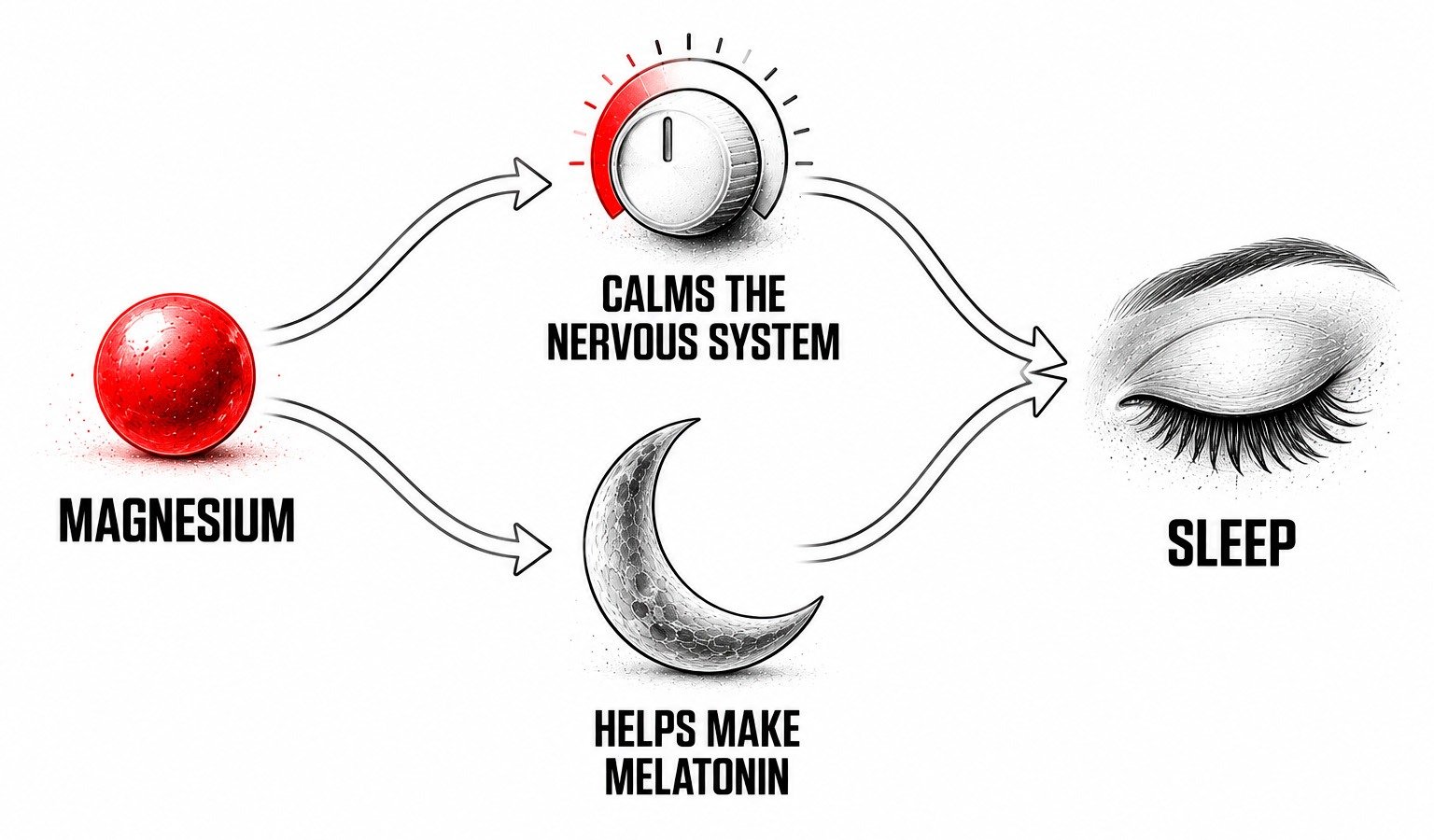
The Sleep Bible lists magnesium in two places. First, it supports GABA, the brain’s main calming signal. Second, it’s also a cofactor all the way along the pathway that turns serotonin into melatonin.
In other words, magnesium works on the “off” switch from two sides. It calms the nervous system, and it helps you make your own melatonin. In Chapter 5, then, I put it plainly: magnesium before bed relaxes the nervous system, and most guys report noticeably better sleep within the first week.
The trial the book cites. In 2012, 46 older adults with insomnia took 500 mg of magnesium or placebo for 8 weeks. As a result, the magnesium group fell asleep faster, slept more efficiently and scored better on an insomnia scale. Meanwhile, their melatonin went up, and cortisol went down [2].
The meta-analysis. In 2021, a review pooled three trials with 151 older adults. Magnesium cut the time to fall asleep by about 17 minutes compared with placebo. Total sleep time rose by about 16 minutes, but that wasn’t significant. However, the authors rated the evidence as low quality [3].
So here’s the honest picture: the effect is modest, and the trials are small and mostly in older people. Still, magnesium is cheap and safe at normal doses, and the downside is close to zero. That’s why the book keeps it in the base of its sleep stack.
Below is the full magnesium dose table by goal, the label math, which form to pick, the Sleep Bible stack, the upper limit and interactions.
The full magnesium dose table by goal, the elemental math, which form to pick, the Sleep Bible stack, interactions and who should be careful are for members. Create your free account to keep reading.
When you create your free membership, you’ll unlock the full article and be able to continue reading.
Already a member?
This page documents Dr. Tony Huge’s research and self-experimentation. It is journalism and education, not medical advice, and it creates no doctor-patient relationship. Dr. Tony Huge holds a Juris Doctor; he is a lawyer, not a physician. Read the full Legal Disclaimer.