
The GHK-Cu dosage in my book depends on the goal. For longevity, it’s 1 to 3 mg injected two or three times a week. For hair, it’s 2 to 4 mg a day plus a nightly cream. GHK-Cu is a copper peptide your body already makes, and it shows up in the longevity chapter, the Partner Protocol and the hair bonus. The book calls it the master gene expression resetter. This page puts every dose in one table, explains why the hair dose is so much higher, and separates what’s proven in people from what isn’t yet.
First, GHK is a tripeptide: three amino acids, glycine, histidine and lysine. It grabs copper from the blood, so the pair is called GHK-Cu. It was discovered in 1973 in human plasma.
Your body then uses it as a repair signal. It shows up where tissue is damaged and helps rebuild the matrix around cells: collagen, elastin and the other structural proteins that keep skin firm.
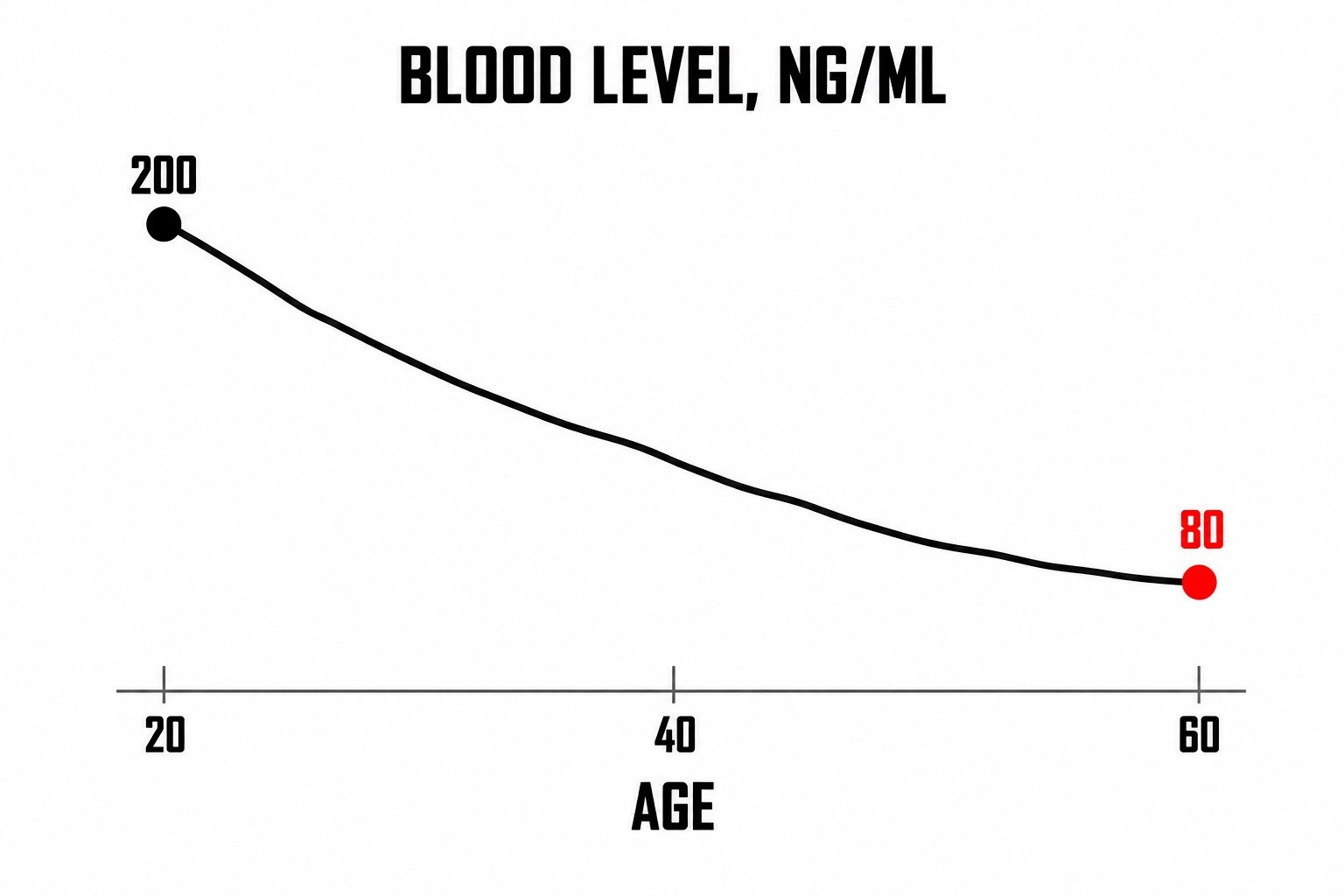
However, levels drop with age. In the review the book cites, blood GHK is about 200 ng/mL at age 20 and about 80 ng/mL by age 60 [1]. That’s the logic behind putting it back.
The book says GHK-Cu activates over 4,000 genes. So here’s where that comes from. In a lab database that tests how compounds change gene activity in cells, GHK changed the expression of about 31 percent of human genes. Also, it turned about 59 percent of those up and 41 percent down [1].
So the honest version is “shifts the expression of thousands of genes, in lab data.” That’s still remarkable for a three-amino-acid peptide. However, it’s a cell result, not a measurement in people. In other words, it tells you why GHK-Cu is interesting, not what it will do in your body.
Topical, on skin: the best data. Several small human studies of GHK-Cu creams ran for 8 to 12 weeks. In one, 71 women with sun-damaged skin saw improvements in thickness, firmness, fine lines and wrinkle depth. In a thigh-skin study, it boosted collagen production in 70 percent of women, compared with 50 percent for vitamin C cream and 40 percent for retinoic acid [1]. Still, many of these are small or pilot studies.
Injected: no human trials. Instead, the systemic data is in mice, rats and pigs [1]. Every injected protocol in people, including the book’s, is experience, not trial data.
Hair: weaker than it looks. The book says it directly stimulates hair follicles. However, the reviews it cites don’t describe a human hair study, and the most quoted hair study actually used a different copper peptide, AHK-Cu [2].
Below is the full GHK-Cu dosage table by goal, injectable vs topical, the cycle, stack partners, the copper math, safety and labs.
The full GHK-Cu dosage table by goal, injectable vs topical, the cycle, stack partners, the copper math, safety, labs and the comparison with BPC-157 and TB-500 are for members. Create your free account to keep reading.
When you create your free membership, you’ll unlock the full article and be able to continue reading.
Already a member?
This page documents Dr. Tony Huge’s research and self-experimentation. It is journalism and education, not medical advice, and it creates no doctor-patient relationship. Dr. Tony Huge holds a Juris Doctor; he is a lawyer, not a physician. Read the full Legal Disclaimer.