
Propranolol for sleep is one of the tools in my Sleep Bible for one specific problem: a body that won’t shut off. Trenbolone, clenbuterol, tesofensine and other stimulants keep your heart pounding and your mind racing at night. Propranolol blocks that adrenaline signal. But there’s a catch most people never hear: it also cuts your own melatonin by up to 80%. This page covers every dose in the book, how to fix the melatonin problem and the safety rules that matter.
Propranolol is one of the oldest beta-blockers. It blocks the beta receptors that adrenaline and noradrenaline act on. As a result, your heart beats slower and with less force, your blood pressure drops and the physical signs of stress, like a pounding heart and shaky hands, calm down.
Two things make it different from most beta-blockers. First, it’s non-selective: it blocks both beta-1 receptors (mostly in the heart) and beta-2 receptors (in the lungs, blood vessels and muscles). Second, it crosses into the brain, so it also quiets racing thoughts and that wired, on-guard feeling.
Also, its half-life is about 4 hours, so a bedtime dose covers the first half of the night.
Your nervous system has a gas pedal and a brake. At night, the brake should take over. However, some compounds keep a foot on the gas:
In that state, no sleep supplement will fix the problem, because your body is still on alert. That’s where propranolol for sleep comes in. It cuts the adrenaline signal at the receptor, so the heart slows down and the body can drop into deep sleep.
The Sleep Bible’s Eighth Law says it best: target the pathway, not the symptom. If the problem is sympathetic overdrive, use a beta-blocker.
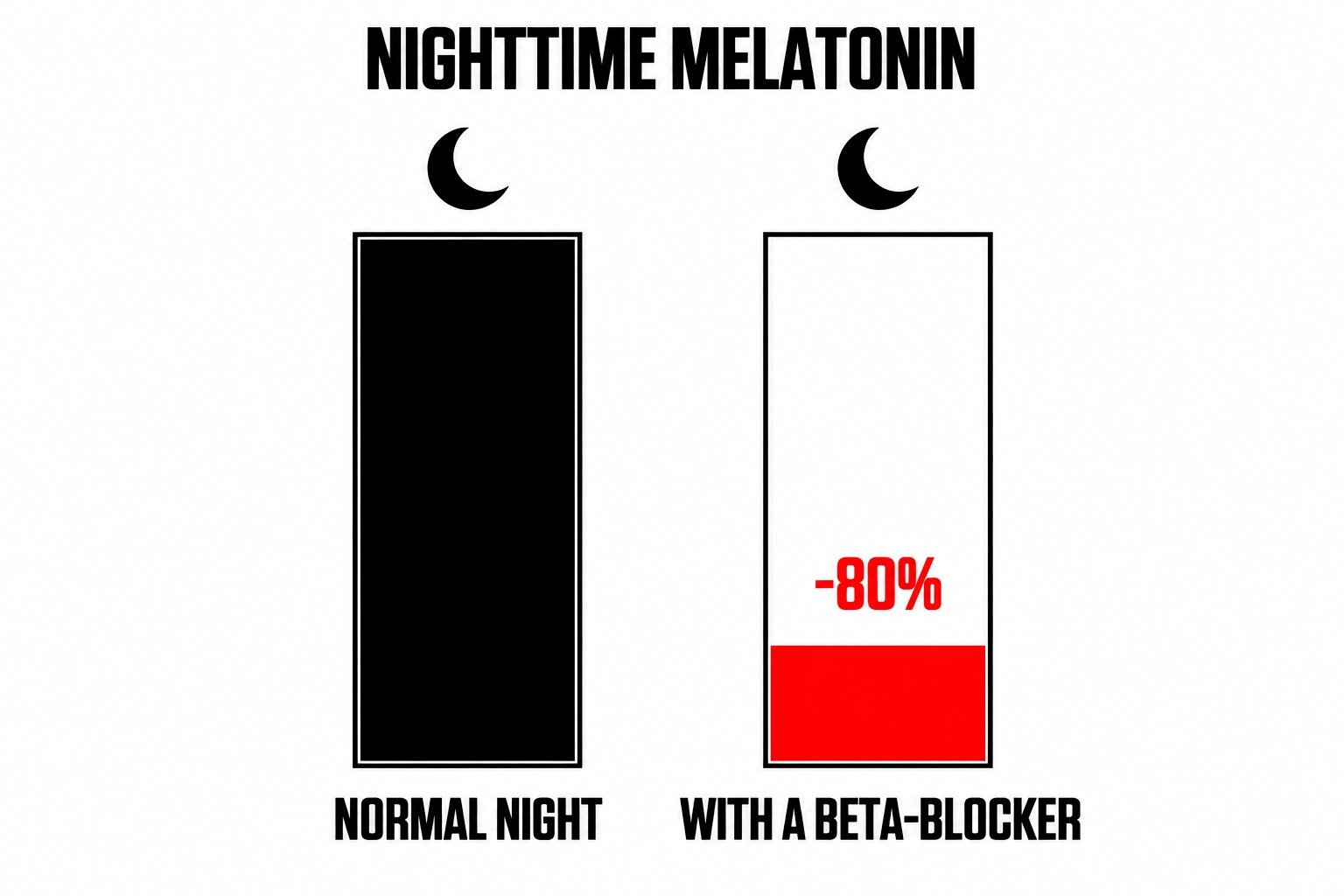
Here’s what most people don’t know. At night, your pineal gland makes melatonin when beta-1 receptors switch on the key enzyme at night. Block those receptors, and melatonin drops.
In a 1999 study, a single 40 mg dose of propranolol cut nighttime melatonin by 80% in healthy volunteers [1]. So propranolol helps you fall asleep, but without melatonin the quality of your sleep can suffer.
That’s why the book is firm: when you use propranolol for sleep, you must take low-dose melatonin with it, 0.3 to 0.5 mg.
Below is every dose in the book, the bedtime schedule, propranolol vs nebivolol, the stacking warning and the safety rules.
Every propranolol dose in the book, the melatonin pairing, the bedtime schedule, propranolol vs nebivolol, the safety rules and who must never take it are for members. Create your free account to keep reading.
When you create your free membership, you’ll unlock the full article and be able to continue reading.
Already a member?
This page documents Dr. Tony Huge’s research and self-experimentation. It is journalism and education, not medical advice, and it creates no doctor-patient relationship. Dr. Tony Huge holds a Juris Doctor; he is a lawyer, not a physician. Read the full Legal Disclaimer.