
The berberine dosage in my book is 500 mg, taken with carb meals, two to three times a day. It shows up in four places: the fat loss focus of Natural Plus, the insulin pathway of the Muscle Matrix, the longevity chapter and the Sleep Bible. In the longevity chapter, I call it one of the most powerful natural AMPK activators. Online, people call it “nature’s Ozempic.” This page puts all the doses in one table, shows what the research supports and explains why that nickname is wrong.
Berberine is a bright yellow compound found in several plants, such as goldenseal and barberry. It has also been used in traditional Chinese medicine for a long time.
Its main target is AMPK. In Chapter 14, I call AMPK the repair mode switch: it turns on when energy is low, and it pushes the body to burn fuel, clear out damaged parts of cells and improve insulin sensitivity. Berberine flips it on, so as a result it mimics some of the metabolic effects of exercise and calorie restriction.
That’s also why the book uses it on the fat loss side. Lower insulin means fat cells release fat more easily.
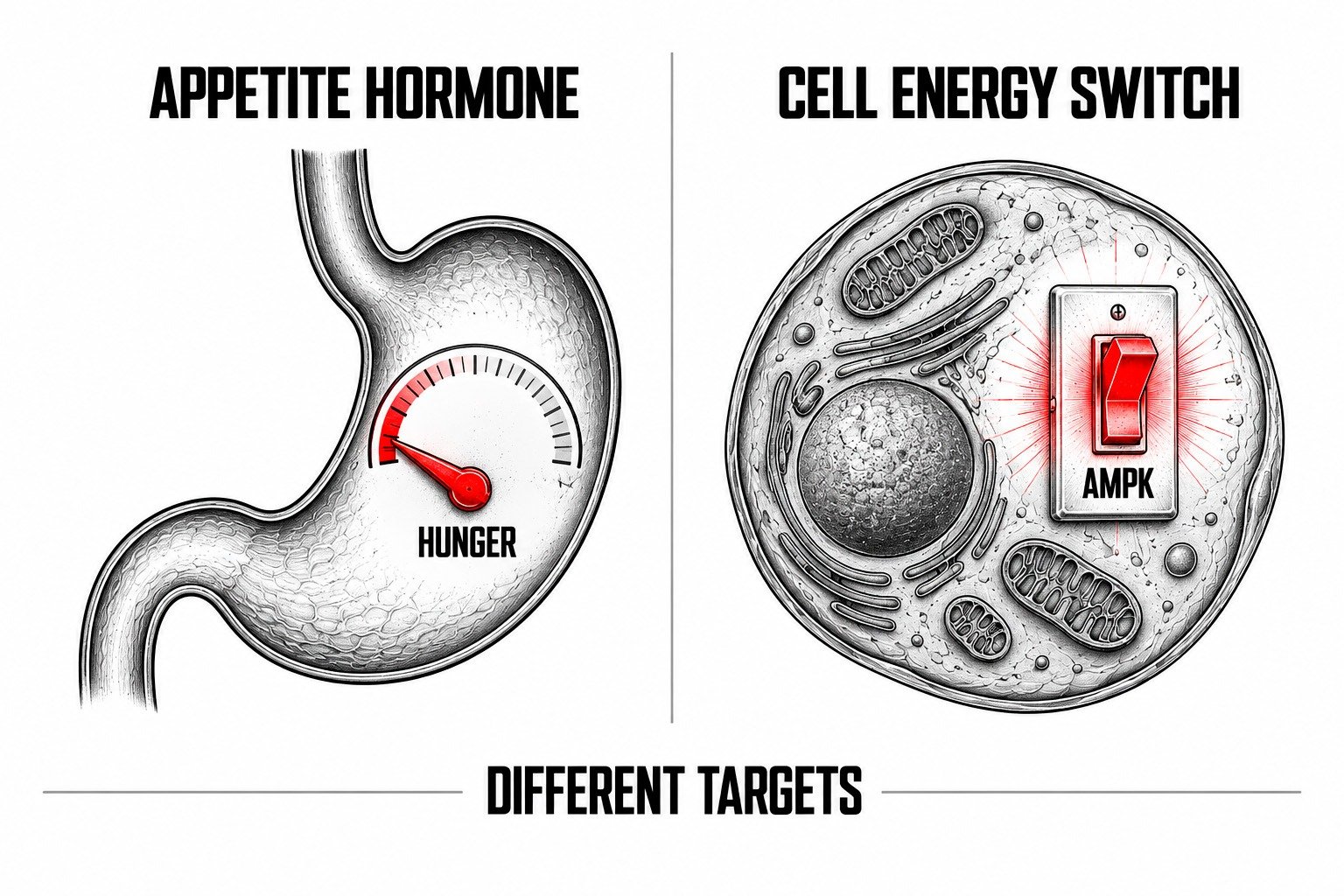
No. The nickname spread on social media in 2023, but the two work in completely different ways.
First, Ozempic copies GLP-1, a gut hormone that cuts appetite and slows the stomach. Berberine works on AMPK, the cell’s energy switch [1]. Therefore, it doesn’t shut down hunger the way a GLP-1 does.
The weight data shows the difference. A meta-analysis of 10 trials found that berberine cut waist size by about 2.75 cm and BMI by about 0.3 points. The change in body weight wasn’t significant [2]. So the effect on belly fat is real but modest, far from the 10 to 15 percent loss seen with GLP-1 drugs.
Blood sugar. This is where berberine is strongest. A 2022 meta-analysis pooled 37 randomized trials with 3,048 people with type 2 diabetes. Berberine lowered fasting glucose by about 0.8 mmol/L (about 15 mg/dL) and HbA1c by about 0.6 percent. Also, it didn’t raise the risk of low blood sugar [3].
Lipids. The longevity chapter credits it with improving lipids. The diabetes trials that the book’s field relies on, including an early head-to-head with metformin, found lower cholesterol and triglycerides too [4].
Fat. Smaller effect, mostly on the waist, as covered above [2].
In short, berberine is a real blood sugar tool with modest fat loss benefits.
Below is the full berberine dosage table by goal, timing, the cycling rule, the GH and insulin stacks, side effects, interactions and the comparison table.
The full berberine dosage table by goal, timing, the cycling rule, the GH and insulin stacks, side effects, interactions and the comparison with metformin, SLIN and GLP-1s are for members. Create your free account to keep reading.
When you create your free membership, you’ll unlock the full article and be able to continue reading.
Already a member?
This page documents Dr. Tony Huge’s research and self-experimentation. It is journalism and education, not medical advice, and it creates no doctor-patient relationship. Dr. Tony Huge holds a Juris Doctor; he is a lawyer, not a physician. Read the full Legal Disclaimer.