
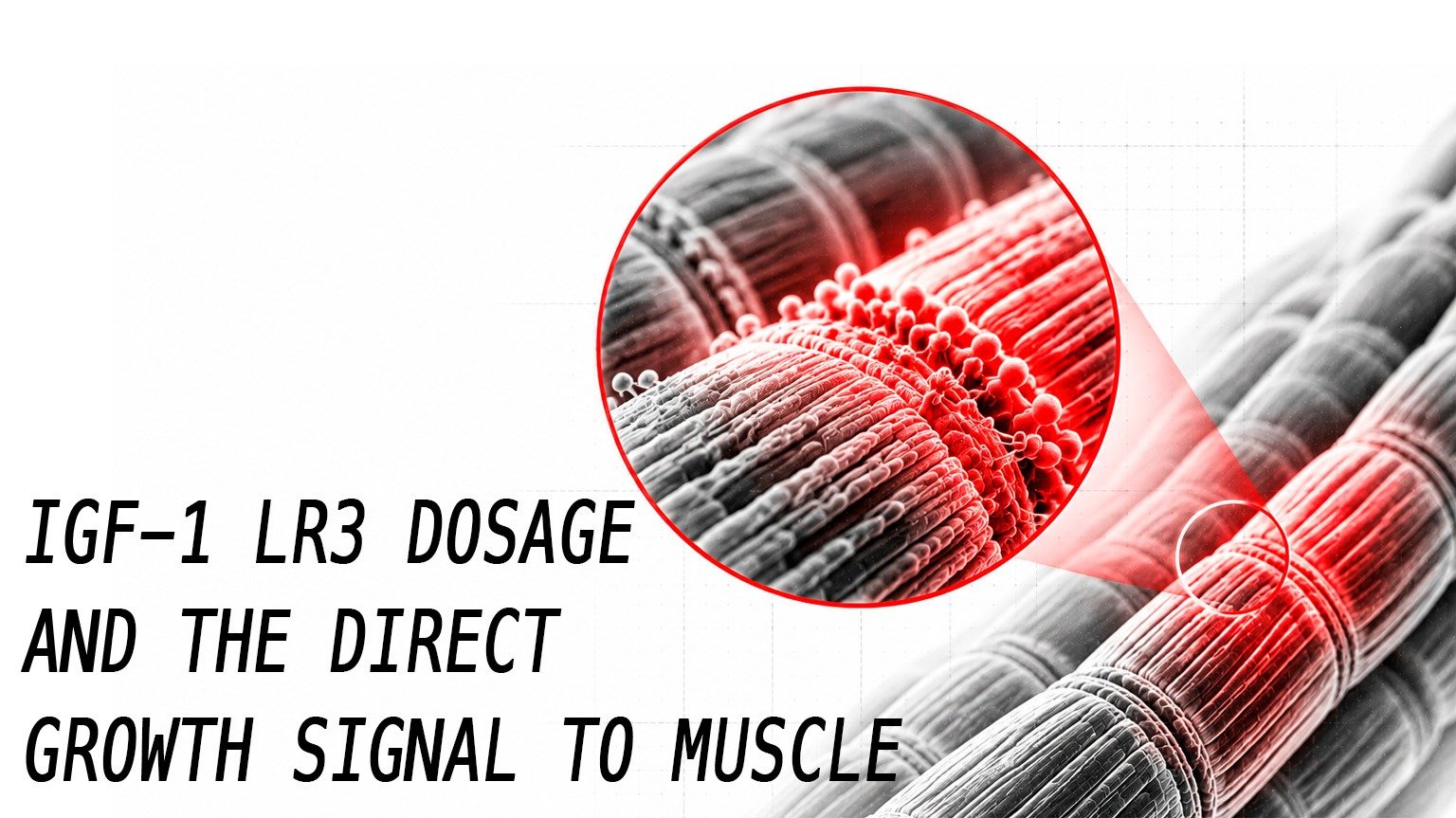
The IGF-1 LR3 dosage in the book is 100 mcg a day, inside the Mass Blast Protocol in Chapter 9. Growth hormone works by making your liver release IGF-1. IGF-1 LR3 skips that step. It is a modified, long-lasting version of IGF-1, the growth factor that actually tells muscle to build. That makes it one of the most direct growth signals you can use, and one with real risks, low blood sugar first. This page puts together what the book says, what the research shows and how to run it with your eyes open.
IGF-1, insulin-like growth factor 1, is the growth factor your liver makes when growth hormone tells it to. Most of what people credit to growth hormone, the muscle building and the repair, IGF-1 actually does. It activates the IGF-1/Akt pathway in muscle, so it turns on protein synthesis and turns off protein breakdown.
IGF-1 LR3, on the other hand, is a modified version made in a lab, and two changes set it apart. It has an arginine (R) in place of glutamic acid at position 3, and it carries 13 extra amino acids at the front. That is where the name comes from: Long, R, 3.
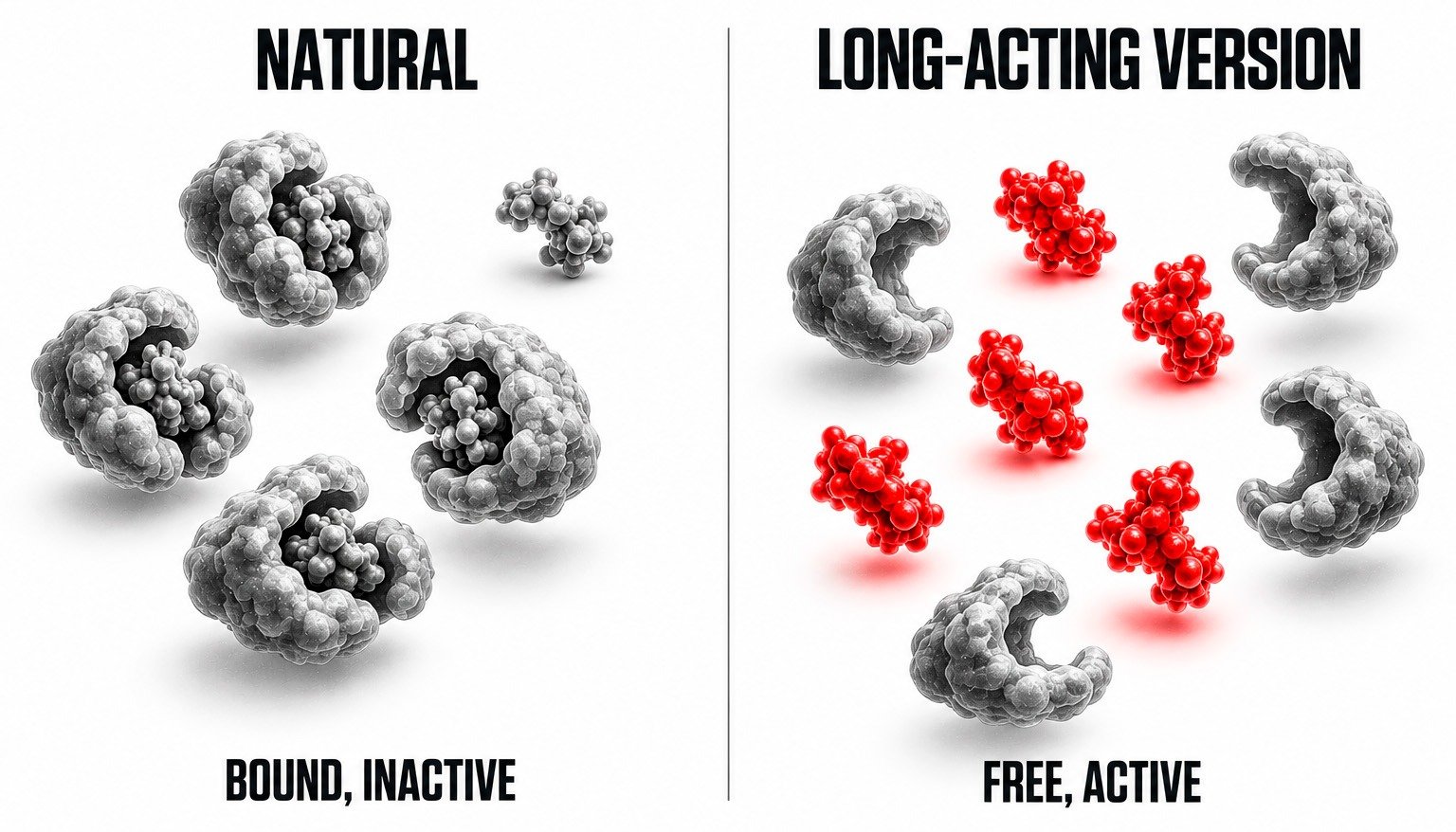
Most natural IGF-1 in your blood is held by binding proteins, which keep it inactive and control how much reaches your tissues. However, free IGF-1 that escapes them is cleared quickly.
The changes in IGF-1 LR3 make it bind those proteins very weakly, so more of it stays free and active, and it lasts far longer: about 20 to 30 hours. In rats, it was roughly 2.5 to 3 times more potent than regular IGF-1 [1].
That long, free signal is the whole point of IGF-1 LR3, and also its main risk. Because IGF-1 acts like insulin, a strong, long-lasting dose can pull your blood sugar down for hours.
IGF-1 LR3 has never been tested in human trials. Instead, it is mainly used in labs to help cells grow in culture.
The key animal study, in 1992, gave IGF-1 and its variants to rats whose muscle was breaking down from dexamethasone, a steroid drug. IGF-1 cut muscle breakdown and restored weight, and the LR3 version was especially strong [1]. However, that study measured protein balance, and it didn’t measure new muscle fibers.
The closest approved drug is mecasermin (Increlex), regular IGF-1 for children who can’t make their own. Its label is the best guide to the risks: low blood sugar is the most common problem [2].
Below is the full IGF-1 LR3 dosage table, the timing rules, the low blood sugar protocol, side effects, labs and the full comparison.
The full IGF-1 LR3 dosage table, the timing rules, the low blood sugar protocol, labs and the full research are for members. Create your free account to keep reading.
When you create your free membership, you’ll unlock the full article and be able to continue reading.
Already a member?
This page documents Dr. Tony Huge’s research and self-experimentation. It is journalism and education, not medical advice, and it creates no doctor-patient relationship. Dr. Tony Huge holds a Juris Doctor; he is a lawyer, not a physician. Read the full Legal Disclaimer.