
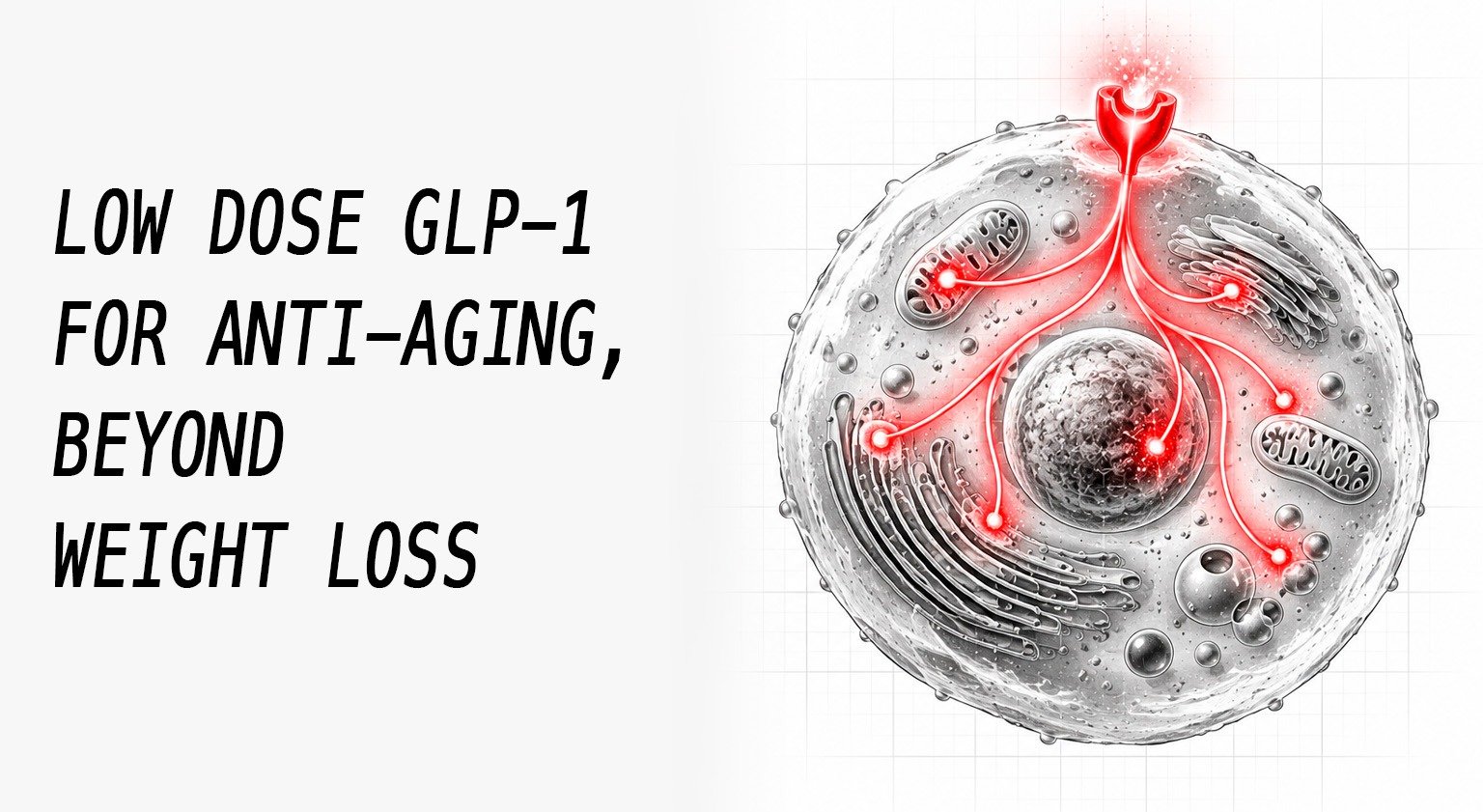
A low dose GLP-1 is the opposite of how most people use these drugs. Ozempic, Mounjaro and the rest were built to kill appetite and drop weight. However, the receptor they hit also drives cleanup, repair and inflammation control in your cells, and at least in animal studies, those effects show up even at doses too low to change body weight. In Chapter 14 I use retatrutide at a fraction of the weight loss dose, paired with MK-677 so I can still eat, train and grow. This page lays out that protocol and how it compares to the full doses.
GLP-1 is a hormone your gut releases after you eat. It tells your pancreas to release insulin, slows your stomach, and tells your brain you are full.
GLP-1 drugs copy that signal and make it last for days. There are three generations:
They were developed for diabetes, and then they became the biggest weight loss drugs in history.
At full doses, these drugs crush your appetite. So if you are obese, that is the point. If you are an athlete trying to build muscle, it is a problem, because you can’t grow without eating.
But appetite is only one thing the GLP-1 receptor controls. In a 2025 study in Cell Metabolism, middle-aged mice got a low dose of a GLP-1 drug for about 30 weeks. Their organs shifted toward a younger molecular profile, and their metabolism looked like that of younger animals [1]. In the book’s reading of that study, the effects showed up even when weight and food intake didn’t change.
That is the idea behind a low dose GLP-1: keep the receptor signal, lose the appetite kill. Mice are not people, and the study didn’t show the mice lived longer. Still, it is the logic of my protocol.
Below is the full low dose GLP-1 protocol, the dose comparison with the weight loss drugs, the stack, muscle protection, side effects and labs.
The full low dose GLP-1 protocol, the dose comparison with Ozempic, Mounjaro and retatrutide, muscle protection, side effects and labs are for members. Create your free account to keep reading.
When you create your free membership, you’ll unlock the full article and be able to continue reading.
Already a member?
This page documents Dr. Tony Huge’s research and self-experimentation. It is journalism and education, not medical advice, and it creates no doctor-patient relationship. Dr. Tony Huge holds a Juris Doctor; he is a lawyer, not a physician. Read the full Legal Disclaimer.