
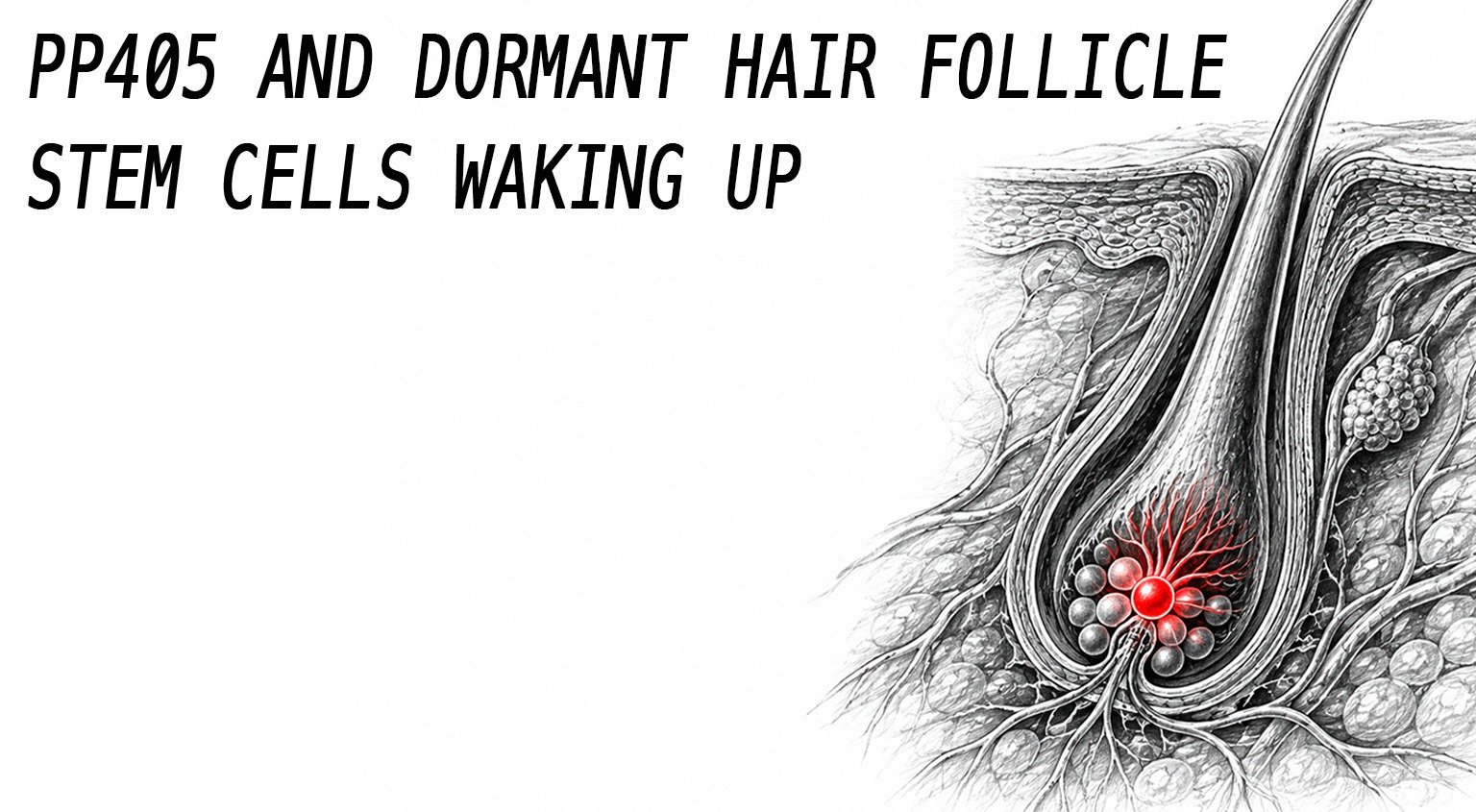
PP405 is the compound my hair bonus ranks first: “The Stem Cell Reactivator.” Most hair loss drugs slow the loss. PP405 tries something different. It aims to wake up dormant hair follicle stem cells so they start growing hair again. It’s a topical drug from Pelage Pharmaceuticals, it’s still in clinical trials, and the first patient in its Phase 2/3 trial was dosed in October 2026. This page covers how PP405 works, what the early trial showed, how the book uses it, and why what’s sold online isn’t the real thing.
PP405 (written PP-405 in the book) is a small-molecule drug applied to the scalp. Pelage Pharmaceuticals, a company spun out of UCLA research, is developing it for androgenetic alopecia, the common pattern hair loss in men and women [1].
It doesn’t block DHT like finasteride, and it doesn’t open blood vessels like minoxidil. Instead, it acts on the stem cells at the base of each follicle. That’s why the book calls it a completely new mechanism.
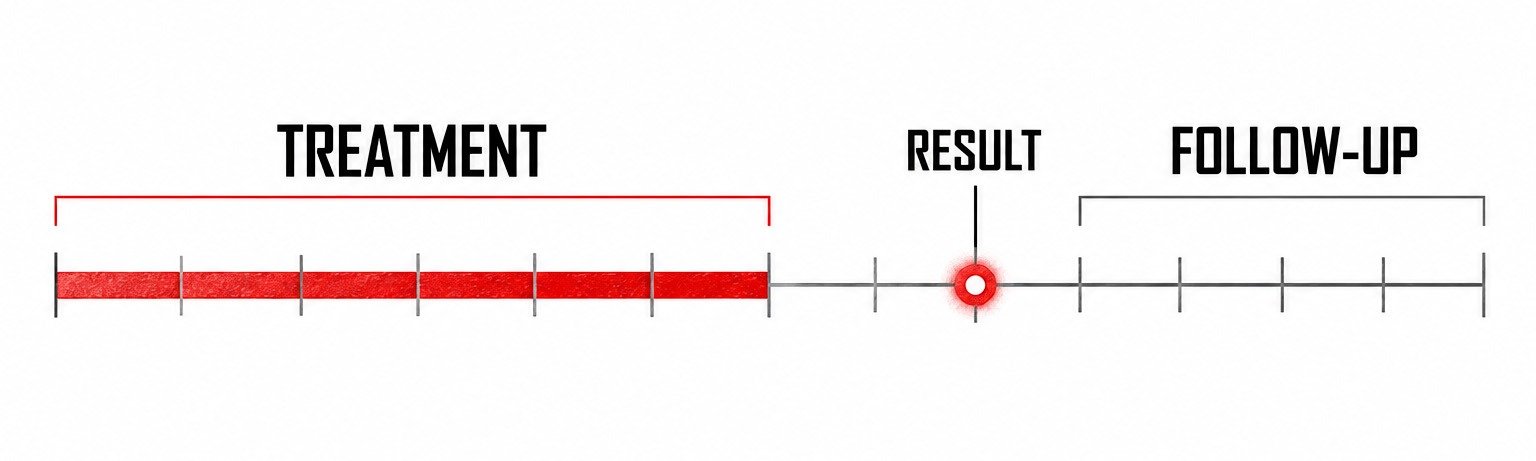
In June 2025, Pelage reported a Phase 2a trial in 78 men and women. They applied PP405 or placebo once a day for 4 weeks, and the team followed them to week 12 [1].
Overall, those numbers are strong for 4 weeks of treatment. Still, they come from company press releases, the 31% is a subgroup, and the full data hasn’t been published yet. Below are how it works on the stem cell, the book’s protocol next to the trial, where PP405 sits in the hair stack, what’s sold online, side effects, who should wait and the comparison with minoxidil and finasteride.
How it works on the stem cell, the book’s PP405 protocol next to the trial, where it sits in the hair stack, what’s sold online, side effects, who should wait and the comparison with minoxidil and finasteride are for members. Create your free account to keep reading.
When you create your free membership, you’ll unlock the full article and be able to continue reading.
Already a member?
This page documents Dr. Tony Huge’s research and self-experimentation. It is journalism and education, not medical advice, and it creates no doctor-patient relationship. Dr. Tony Huge holds a Juris Doctor; he is a lawyer, not a physician. Read the full Legal Disclaimer.