
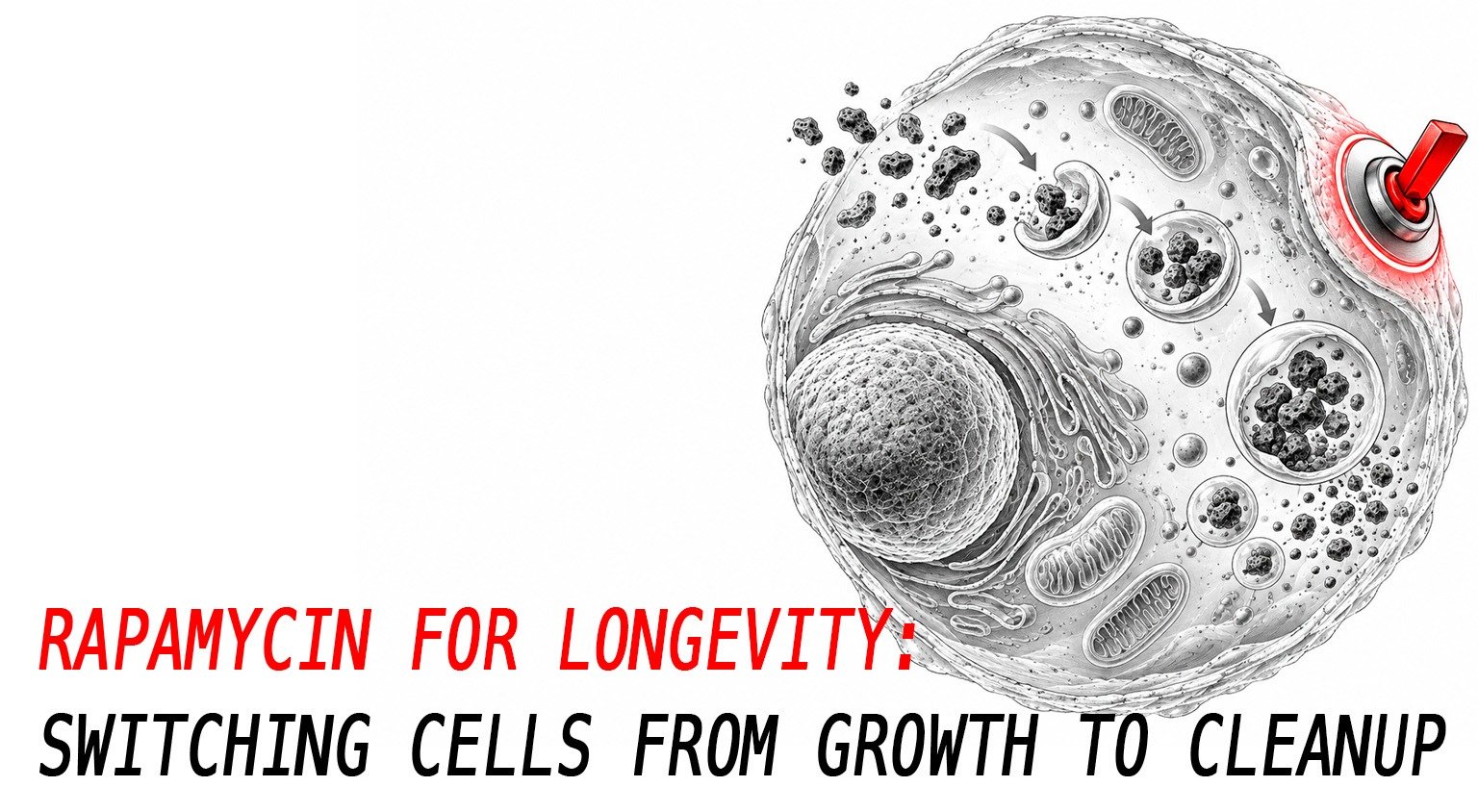
Rapamycin for longevity is the core of my longevity chapter: 3 to 6 mg, once a week, on a rest day. I call it the proven foundation. In mice, it’s the most consistent drug for extending life, and it works by flipping the cell from growth mode to cleanup mode. That’s also the problem for anyone who lifts: the same switch that builds muscle is the one rapamycin turns off. This page covers the dose, why it’s weekly, how the book times it around training, the acarbose stack, and the risks.
Rapamycin, also called sirolimus, comes from a bacterium found in soil on Easter Island, known locally as Rapa Nui. In medicine, it’s approved to prevent kidney transplant rejection, at about 2 mg every day [1].
For longevity, it’s used very differently: a small dose once a week. The goal isn’t to suppress the immune system. Instead, it’s to give the cell a regular cleanup signal.
In the book, I put it this way: the master switch is mTOR. When mTOR is on, you grow. When mTOR is off, autophagy activates and your cells clean house: they break down damaged proteins and broken parts and recycle them.
However, most enhanced men run mTOR hot all the time. They build muscle but never take out the trash.
Rapamycin blocks mTORC1, the growth side of mTOR, so it pushes the cell into cleanup mode. That’s the whole idea behind rapamycin for longevity.
In mice. In 2009, rapamycin extended life even when started late in life [2]. A later study at a higher dose raised median lifespan by 23 percent in males and 26 percent in females [3].
In older people. A related mTOR inhibitor, everolimus, improved the response to a flu vaccine by about 20 percent in adults over 65 [4].
In healthy adults. The PEARL trial gave rapamycin at 5 or 10 mg a week, or placebo, for 48 weeks. Side effects were similar across groups, apart from more stomach symptoms. Women on 10 mg gained lean mass and reported less pain [5]. However, the trial was small, and its compounded rapamycin reached only about a third of the blood levels of the standard drug.
Overall, then, the mouse data behind rapamycin for longevity is the strongest in the field, while the human data is early, small and mostly about safety.
Below is the full dose and schedule, the growth-day and cleanup-day protocol, the acarbose stack, side effects, interactions and labs.
The rapamycin dosage table, the mode-switching protocol around training, the acarbose stack, side effects, interactions, labs and the natural alternatives are for members. Create your free account to keep reading.
When you create your free membership, you’ll unlock the full article and be able to continue reading.
Already a member?
This page documents Dr. Tony Huge’s research and self-experimentation. It is journalism and education, not medical advice, and it creates no doctor-patient relationship. Dr. Tony Huge holds a Juris Doctor; he is a lawyer, not a physician. Read the full Legal Disclaimer.