
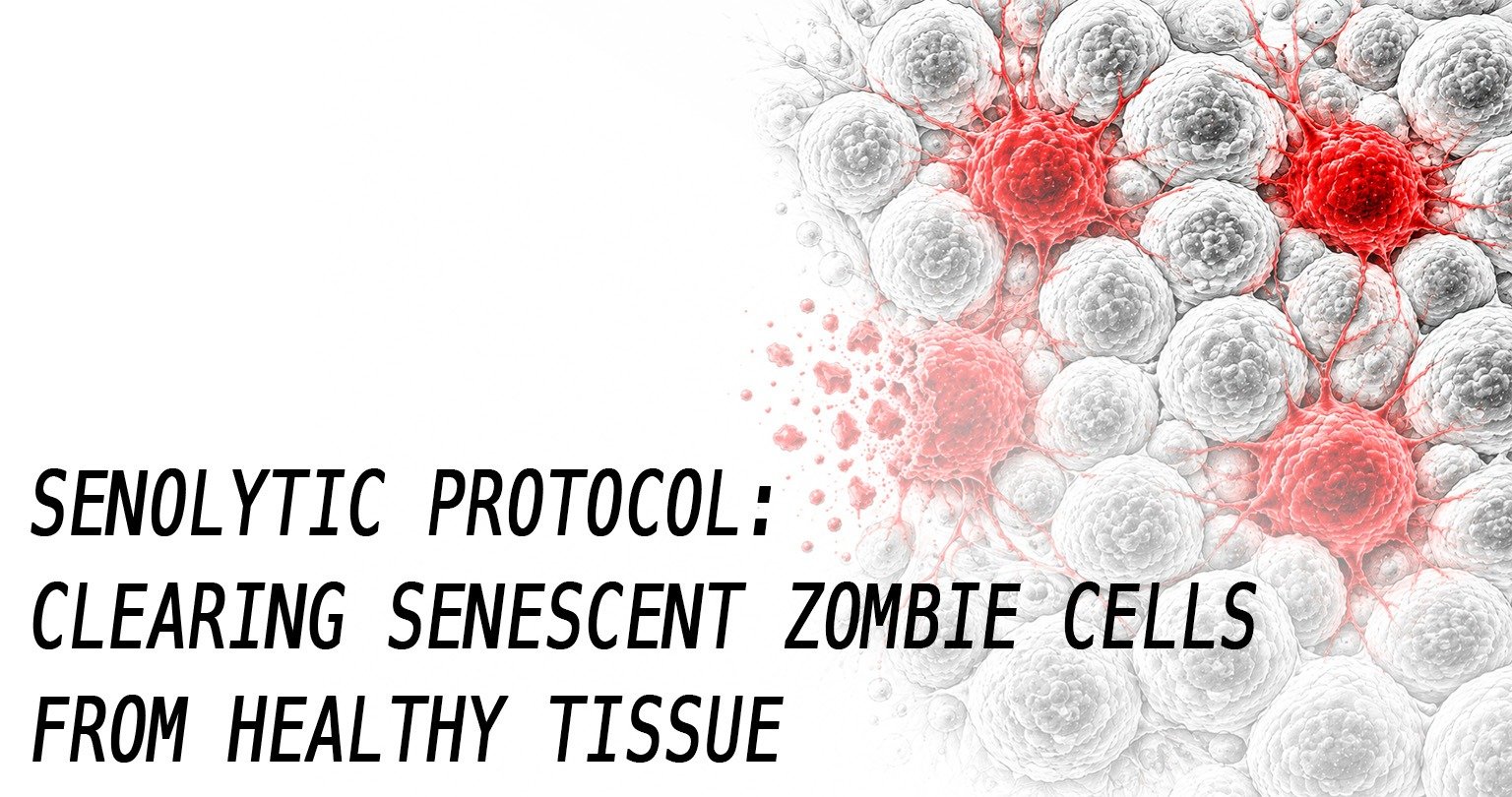
A senolytic protocol is the one part of my Forever Protocol you don’t take every day. Senolytics kill senescent cells, the “zombie cells” that stop dividing but refuse to die, and you hit them hard for a few days a month. In the book there are two main tools: dasatinib plus quercetin, the heavy artillery, and fisetin, the cheap entry point. This page puts every dose on one calendar and shows you what the human trials have found so far.
When a cell gets damaged, it should repair itself or die. Some cells do neither. Instead, they stop dividing and stay alive, and they keep sending out inflammatory signals called SASP. In my book, I call them zombie cells.
At first, a few zombie cells are normal. However, they pile up with age, and their signals spread the damage to healthy cells around them. That’s one of the drivers of what the book calls inflammaging, the chronic low-grade inflammation of aging.
Senolytics are compounds that push those cells to finally die. Healthy cells don’t depend on the same survival tricks, so they’re mostly spared. Then your immune system clears the debris.
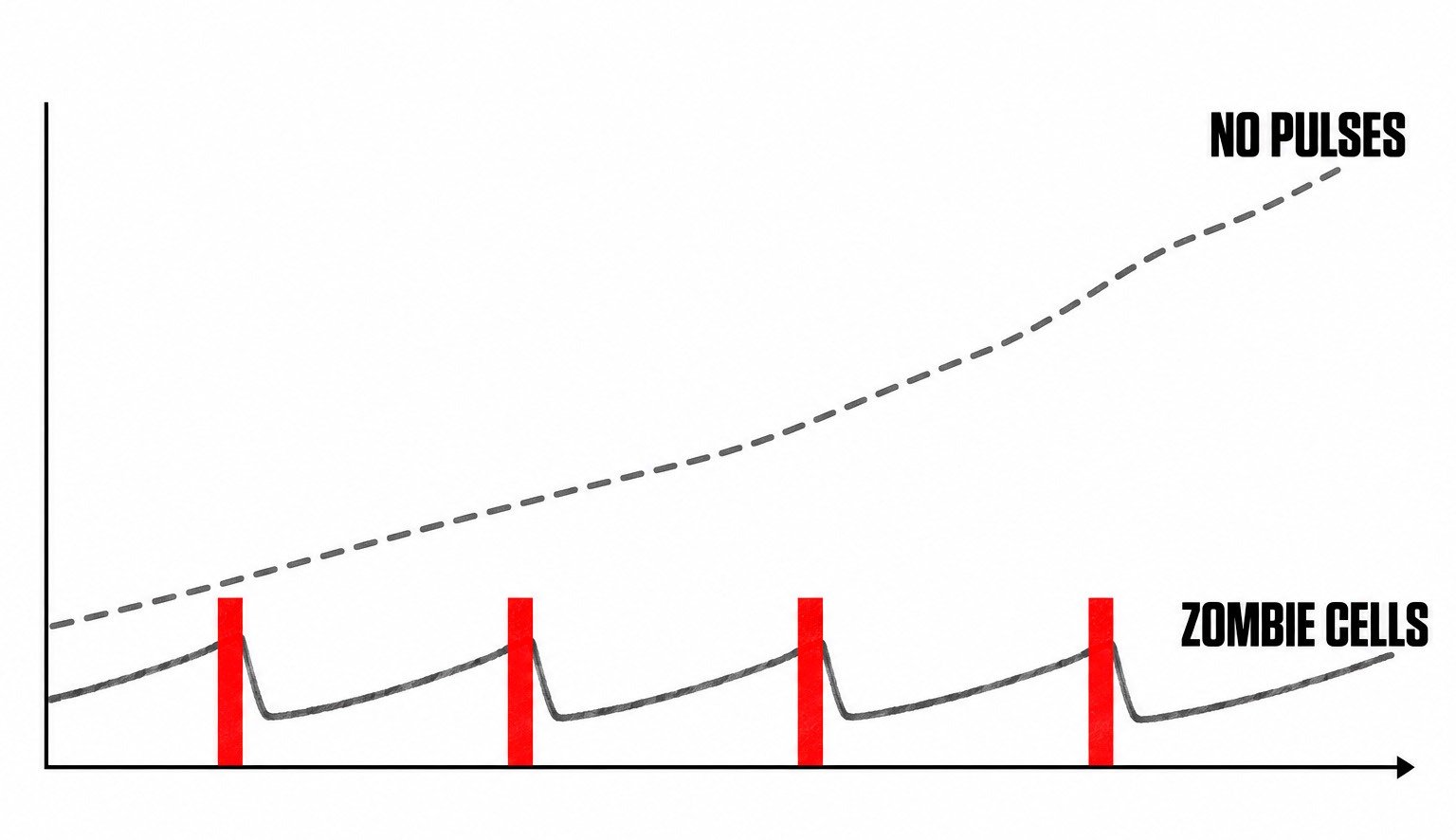
Most of my longevity stack runs every day. A senolytic protocol is the exception.
Zombie cells take weeks to build back up. Because of that, you don’t need to hit them daily. You need a short, heavy dose that overwhelms their survival defenses, and then time off while the body cleans up. The researchers who discovered these drugs call it “hit and run.”
That’s why the book says it twice: pulsed, not daily. Daily low-dose fisetin, in particular, wastes money and never reaches the level needed to kill senescent cells.
My book gives you two main tools, and they fit different people.
Dasatinib plus quercetin is the heavy artillery. Dasatinib is a cancer drug that shuts down one of the survival signals zombie cells rely on. Quercetin, a flavonoid found in onions and apples, hits a different survival route, especially in the cells that line your blood vessels. Together, they cover more types of senescent cells than either one alone. The catch is that dasatinib needs a prescription and carries real risks.
Fisetin is the entry point. It’s a flavonoid found in strawberries, it’s cheap and you can buy it without a prescription. In mice, it cleared senescent cells and extended lifespan even when they started it late in life [3]. That’s why the book says: if you can’t get dasatinib, start your senolytic protocol with fisetin.
Below is every dose in the book, a monthly calendar, the fisetin dose by body weight, the human trials and the risks of dasatinib.
The full senolytic calendar, the fisetin dose by body weight, the human trials, quercetin’s three jobs, dasatinib’s risks and interactions are for members. Create your free account to keep reading.
When you create your free membership, you’ll unlock the full article and be able to continue reading.
Already a member?
This page documents Dr. Tony Huge’s research and self-experimentation. It is journalism and education, not medical advice, and it creates no doctor-patient relationship. Dr. Tony Huge holds a Juris Doctor; he is a lawyer, not a physician. Read the full Legal Disclaimer.